
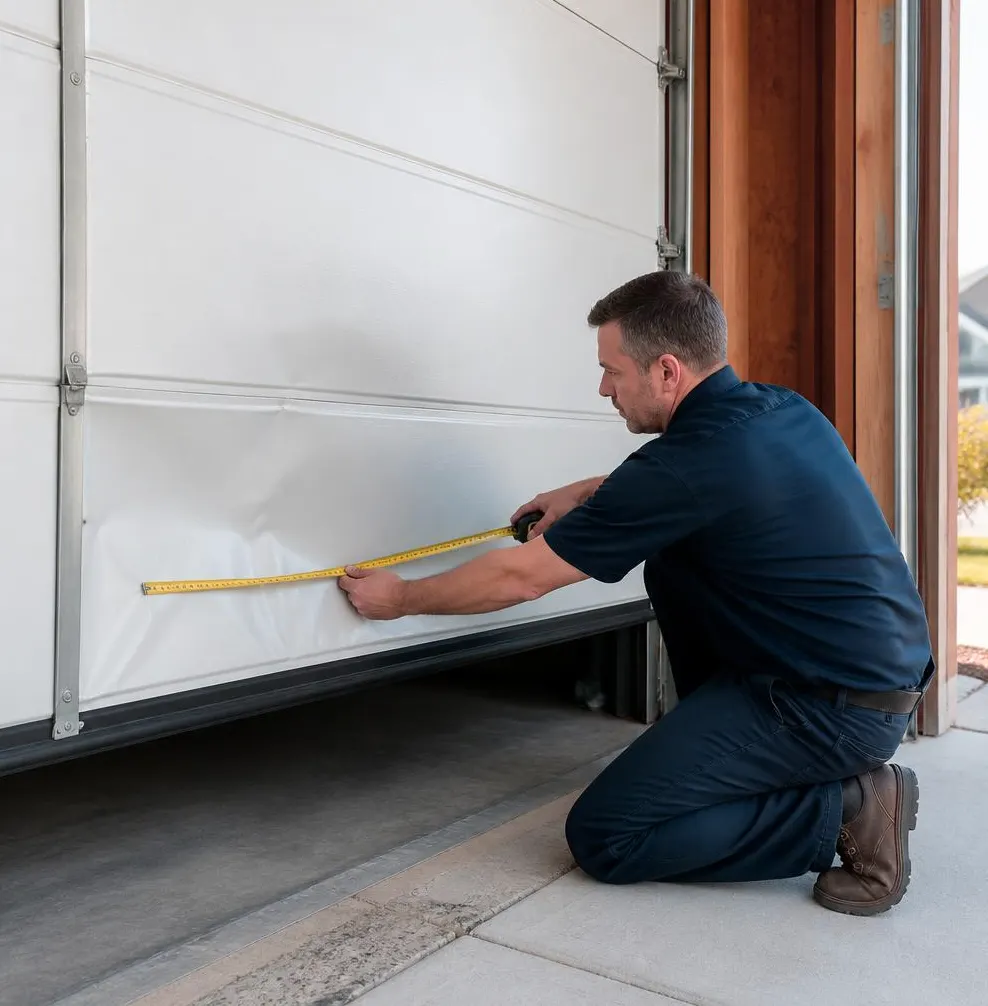
What a Failed Garage Door Costs You
Skip this check for another season and the risk isn't just a dented panel. When a garage door fails during a high-wind event, it doesn't fail quietly. The door buckles or blows inward, and suddenly your garage is an open mouth facing the storm. Wind that would have deflected off a solid wall now rushes into the structure, pressurizing the attic and roofline from underneath. That's how roofs get peeled back and how water finds its way into insulation, drywall, and stored belongings. A repair that might have cost a few hundred dollars in spring replacement or hardware tightening turns into a roofing claim, water damage remediation, and weeks of disruption. The door is usually the cheapest part of the house to reinforce and the most expensive to ignore.
Why the Garage Door Is the Weakest Wall in the House
Every other exterior wall in a typical home is a continuous, fastened assembly: studs, sheathing, siding, all tied together and anchored to the foundation. The garage door is different. It's a large moving panel held in place by thin tracks, a handful of rollers, and torsion springs under tension. It's engineered to move easily, which means it's engineered to be lighter and less rigid than a solid wall by design.
That trade-off is fine under normal conditions. But under wind load, a standard non-reinforced door can flex, bow, or pop out of its tracks well before the surrounding wall shows any stress. Once that happens, the pressure differential inside the garage pushes outward on the roof structure above it. Engineers and building scientists have pointed to this exact failure mode for decades in major wind events — it's not a Gardena-specific quirk, it's basic physics applied to a panel that was never built to resist lateral pressure the way a framed wall is.
The Seasonal Risk Right Now
Fall into winter in this part of Southern California brings a predictable pattern: dry offshore wind events before the rains settle in, followed by wet winter storms once the season turns. Both conditions stress a garage door in different ways. The dry wind events push dust and debris into tracks and rollers, drying out lubrication and accelerating wear on hardware that's already under tension. Then the rain arrives, and any door with compromised weatherstripping or a slightly misaligned track starts letting water in at the threshold, swelling wood trim and encouraging rust on springs and hinges that weren't an issue during the dry months.
Homes near the coast deal with an added layer: salt air accelerates corrosion on springs, hinges, and tracks even when the hardware looks fine on the surface. Combine salt exposure with a wind event and you've got hardware that's weaker than it appears right when it's asked to do the most work.
What to Check Before the Next Storm
- Track alignment. Stand back and look at both tracks from the floor to the top of the door. Any visible bend, gap, or separation from the wall bracket is a point where the door can jump the track under lateral pressure.
- Panel condition. Dents and warping aren't just cosmetic. A compromised panel has lost rigidity exactly where it needs to resist wind push.
- Spring balance. Disconnect the opener and manually lift the door halfway. It should stay in place on its own. If it drifts down or shoots up, the springs are out of balance and won't support the door properly during the stress of a wind event. Don't attempt to adjust torsion springs yourself — they're under enough tension to cause serious injury.
- Roller and hinge wear. Cracked, chipped, or loose rollers let the door shift inside the track. Worn hinges allow panels to flex at the seams.
- Weatherstripping at the bottom and sides. Cracked or flattened seals let wind-driven rain in and are often the first sign that a door isn't sealing tightly enough to resist pressure either.
- Opener battery backup. Winter storms bring power outages. A battery backup on the opener means you're not stuck manually hoisting a door in the rain, and it means the door can still close and seal if power drops mid-storm.
- Bracing and reinforcement. For older or non-insulated doors, retrofit wind bracing kits can be added to the back of the panels. This is a common and relatively low-cost upgrade — generally in the low hundreds of dollars for materials and labor — compared to replacing a door that's failed.
When to Call Gardena Garage Door
If your door fails the balance test, if you see rust forming on springs or track hardware, or if a recent wind event left the door rattling, binding, or visibly out of alignment, it's time for a professional look rather than a DIY fix. Our Garage Door Maintenance service covers a full inspection of tracks, rollers, hinges, and spring tension before storm season puts real stress on the system. If the springs themselves are worn, rusted, or unbalanced, our Spring Replacement service restores proper tension so the door operates the way it was engineered to — which matters most exactly when the wind picks up. We also handle emergency calls if a door fails outright during a storm and you need it secured fast.
If you're in Gardena, Torrance, Carson, Hawthorne, Lawndale, Compton, Inglewood, or Redondo Beach and want your garage door checked before the next wind and rain cycle rolls through, call Gardena Garage Door. We'll inspect it, tell you straight what it needs, and get it storm-ready.